Serie GN-GNE-GNF-GNEF-GTB-GTBF-GNSN-GNSF-GND-GNED-GTBD-GNDF-GSV-GSVD-GTR-GPG

Why Choose an Elastic Coupling: Advantages and Applications"

Description

The choice of a flexible coupling depends on various factors, including:

  1. Type of Load: It's crucial to assess the type of load the coupling will undergo. Rubber pad couplings are suitable for torsional loads.
  2. Load Capacity: Evaluate the load capacity of the flexible coupling based on application specifications. Load capacity depends on the material's strength and flexibility. Ensure that the flexible coupling can handle the load without damage or transmission issues, considering an appropriate service factor.
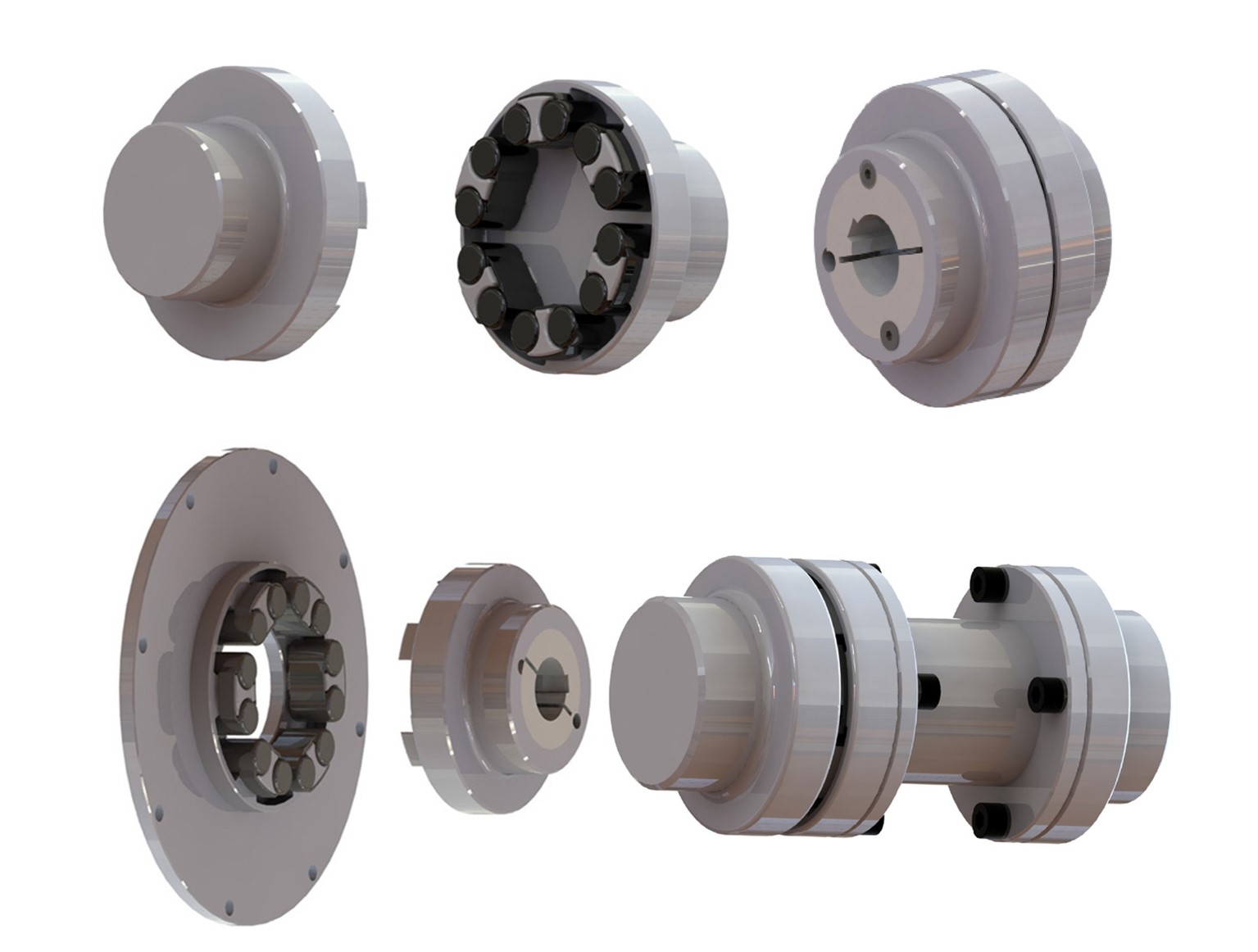
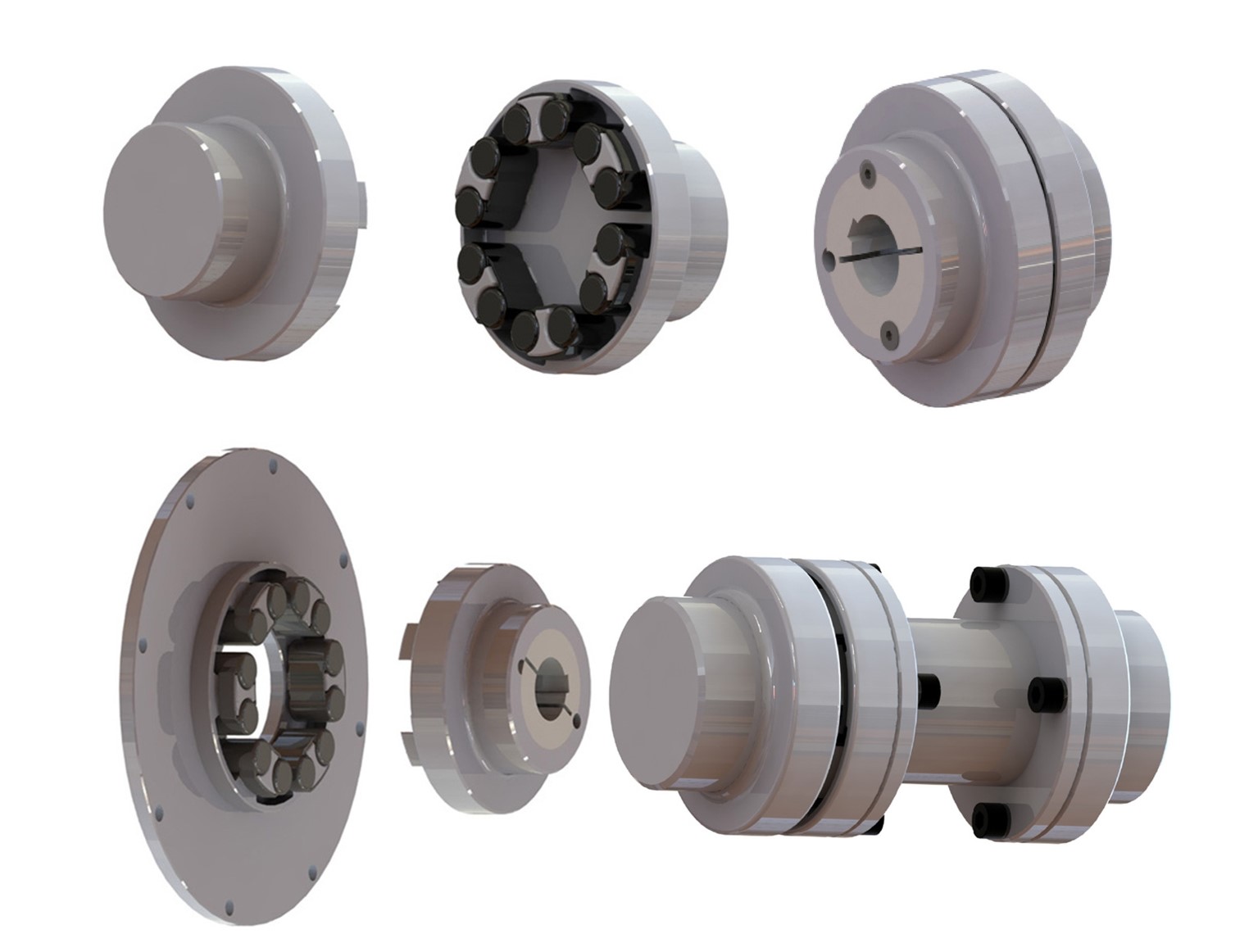
  3. Alignment and Error Compensation: If the application requires error compensation in alignment between parts, choose a flexible coupling with adequate flexibility and angular capacity. Verify alignment during assembly, after transportation, and machine positioning. MC couplings are self-centering as per the design below:
  4. Vibration and Noise Requirements: If the application demands vibration and noise reduction, consider a flexible coupling capable of absorbing and attenuating these phenomena.
  5. Temperature and Operating Environment: Consider environmental conditions where the flexible coupling will operate, such as temperature, chemical exposure, or humidity. These factors can influence the material of the flexible coupling and the overall system performance. Nominal torque values are applicable for temperatures ranging from -20°C to +80°C.

Pay attention to:

Hub Length: Coupling hubs may have different lengths; verify their suitability based on the fastening system.

Holes: Shaft connection hole tolerances must adequate with the shaft tolerances.

Keyway: Keyway dimensions should match to avoid play that could damage parts.

Set Screws: Recommend inserting one or more set screws on the keyway to axially lock the half-coupling, at 45° or 90° angles. Various types of set screws are available; contact us to define the type.

Select the coupling based on Tkn (nominal working torque), calculated using one of the two formulas below, depending on whether the power of the driving machine is expressed in kW or CV. Choose a coupling with a nominal torque higher than the resulting


Tkn from the calculation. 

 Tkn = RATED OPERATING TORQUE 

 P = CONUCTIVE MACHINE POWER 

 n= Rpm Conductive Machine 

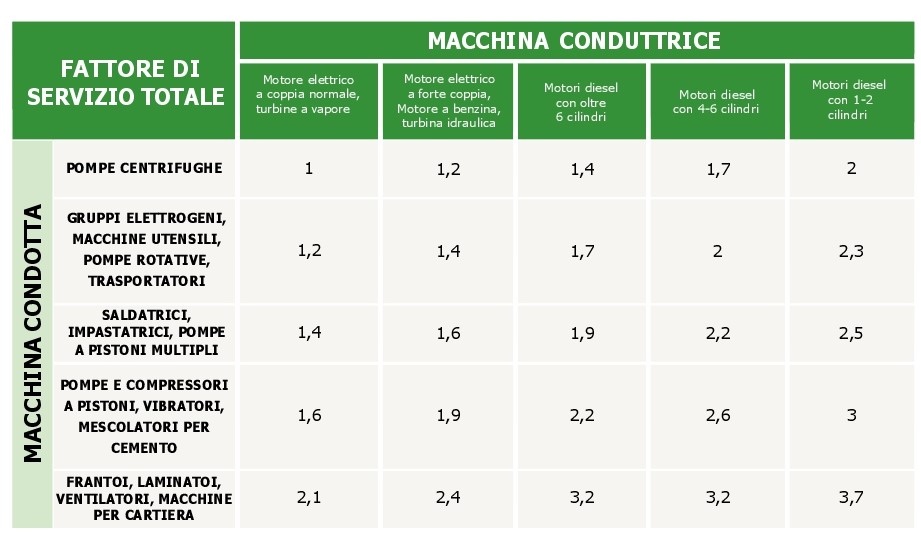
 Fs = SERVICE FACTOR, which will be identified by the user, who may, at his discretion, consult the table below
Recommendations:

  • The buyer is obligated to comply with safety regulations in the country where the coupling is installed.
  • Activate the coupling only after complying with prevailing regulations for machines in the installation country.
  • Protect the coupling to prevent contact and projections in case of malfunction.
  • Ensure the coupling is securely fastened on the shafts and properly aligned before protecting it with the coupling cover/casing.
  • Couplings are intended for use in stationary equipment and specified applications (refer to Table 1).
  • Consult our technical office for any different application

FOTOGALLERY

Request offer

Criteria and recommendations for choosing the joint based on the application.

REQUEST A QUOTE


PRODUCTS IN THE SAME CATEGORY